


Author: Dr. Maralani
-
Short Term Decision Making
by :

Short-term decision making often challenges organizations by prioritizing immediate results over long-term strategy, risking future competitiveness. Companies may react to pressures without realizing they are neglecting strategic investments. Balancing short-term demands with long-term objectives is crucial for sustained growth and maintaining a competitive edge in dynamic environments.
-
Leadership Misalignment
by :
Leadership misalignment threatens strategic execution in organizations, causing inconsistency and inefficiency. It may stem from unclear communication or different interpretations of goals. Addressing this misalignment is crucial for enhancing decision-making processes and fostering cohesive action among leaders. Strong alignment leads to quicker decisions and effective strategy implementation.
-
Poor Strategy Execution
by :

Many organizations struggle with poor strategy execution, leading to a disconnect between planned initiatives and actual outcomes. Challenges include unclear responsibilities, lack of alignment, and weak tracking mechanisms. Effective execution requires structure, clear objectives, and accountability to ensure teams contribute to strategic goals and adapt to changing conditions.
-
Lack of a Growth Strategy
by :

Business Challenge A lack of growth strategy is a common issue in organizations that are either growing without clear direction or struggling to grow at all. Many businesses focus heavily on day-to-day operations and short-term targets but do not define how they intend to grow over time, in which markets, and through which capabilities. Without…
-
Unclear Business Strategy
by :
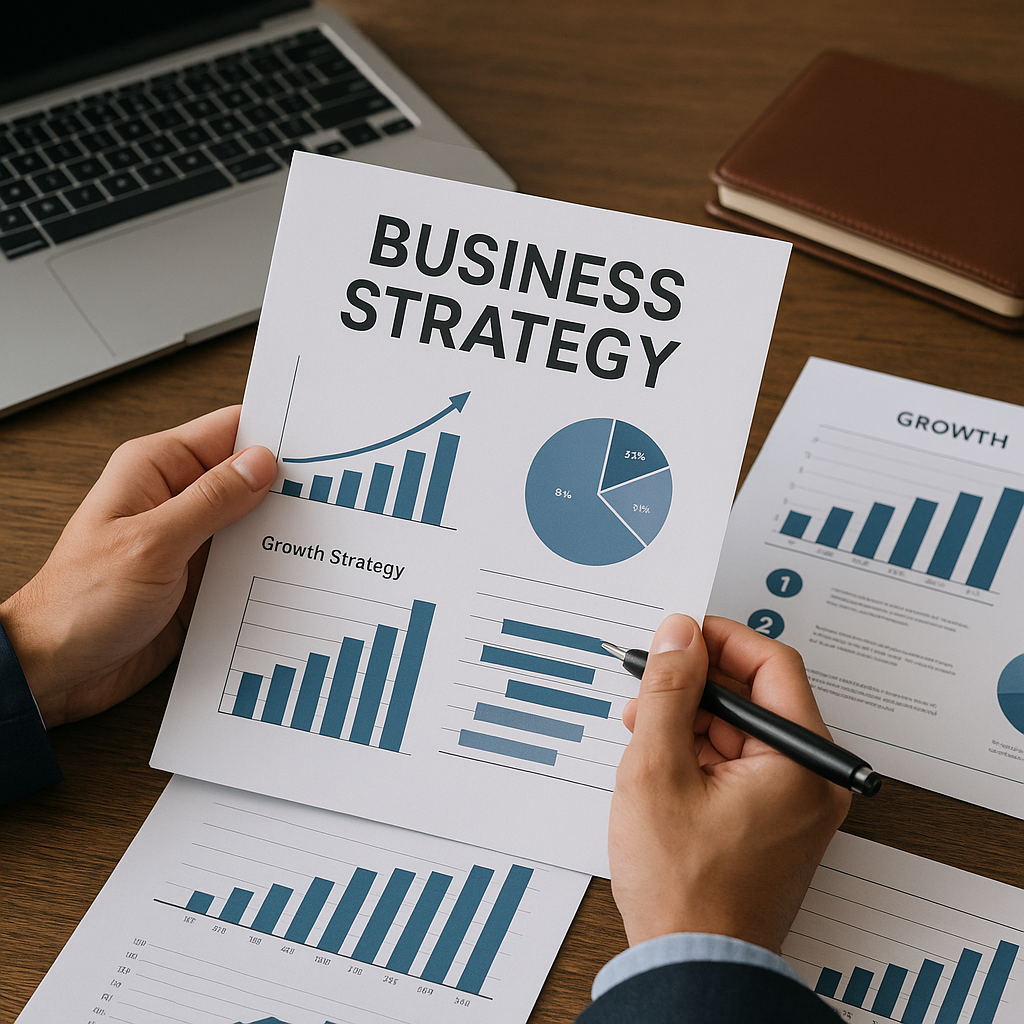
An unclear business strategy hinders decision-making and leads to fragmented execution within organizations. Without defined goals, teams may pursue conflicting objectives, resulting in wasted resources and missed opportunities. Companies that successfully address this issue focus on aligning leadership, defining clear objectives, and translating strategy into actionable plans for sustained growth.
-
Geopolitical Instability
by :

Geopolitical instability poses significant challenges for businesses by disrupting supply chains, customer demand, and investment flows. Companies must strategically manage these risks through scenario planning, supply chain diversification, and operational flexibility. Failing to anticipate geopolitical changes can severely impact revenue and operations, making awareness and proactive adaptation essential for success.
-
When Demand Disappears Overnight: Practical Strategies for Business Survival During Major Disruptions
by :

In a crisis, businesses must prioritize cash flow and quickly identify resilient customers to survive. Adapting revenue models, exploring adjacent markets, and embracing digital transformation are essential for stability. Long-term resilience involves building flexibility, strategic optionality, and a culture prepared for disruptions, ensuring businesses not only survive but emerge stronger.
-
Taiwan – Advancing AI with Strategy and Responsibility
by :

It’s clear that Taiwan is making significant strides in AI development through a balanced approach combining innovation and ethical governance. As you explore Taiwan’s efforts, you’ll see how the nation invests heavily in research, education, and industry partnerships while prioritizing transparency, safety, and human values. By embedding responsibility into its AI framework and fostering international…
-
What Is a Growth Strategy? How Business Strategy Drives Long-Term Success.
by :
There’s more to growing your business than just having a great product or working hard. To achieve long-term success, you need a clear growth strategy that guides your decisions and keeps you focused on the right opportunities. Without this, it’s easy to get distracted or overwhelmed by risky moves that don’t align with your goals.…
-
South Korea – Advancing AI with Strategy and Responsibility
by :

Strategy drives South Korea’s ambitious journey to become a global AI leader by 2030, investing over ₩2 trillion to develop AI semiconductors, education, and ethical frameworks. As you explore this, note how the country balances rapid innovation with strong government oversight and public trust. You’ll see their focus on building AI talent from early education,…
Recent Posts


Topics
- Artificial Intelligence
- Business
- Business Challenge
- Business Strategy
- Communication
- Digital Transformation
- Engineering
- Finance
- General
- Healthcare
- Human Resources
- Information Technology
- Interviews
- Knowledge Work
- Marketing
- Software Development
- Technology
- The AI Shift
Keywords