


Category: Information Technology
-
How Is Artificial Intelligence Revolutionizing The Development Of Autonomous Vehicles And Their Applications?
by :

Many advancements in artificial intelligence are paving the way for the rapid evolution of autonomous vehicles. As you explore this groundbreaking technology, you will discover how AI enhances safety, efficiency, and navigation across various applications. With the potential to drastically reduce traffic accidents and improve transportation logistics, understanding these innovations can empower you to appreciate…
-
How Is Artificial Intelligence Enhancing Convenience In Smart Home Devices And Applications?
by :

Just think about how artificial intelligence is transforming your living space into a hub of convenience and efficiency. By integrating AI, your smart home devices can anticipate your needs, streamline daily tasks, and enhance your overall quality of life. Your devices can learn from your preferences, making them not just reactive but proactive in improving…
-
What is Generative AI? All you need to learn.
by :
Generative AI is a subset of artificial intelligence that creates original content, ranging from text to art, using techniques like Generative Adversarial Networks and Transformers. It operates by interpreting user prompts to generate responses, enhancing creativity and productivity across various domains, including content creation and automation. Effective prompt design is crucial for optimal results.
-
Impact of Artificial Intelligence on Knowledge Work
by :
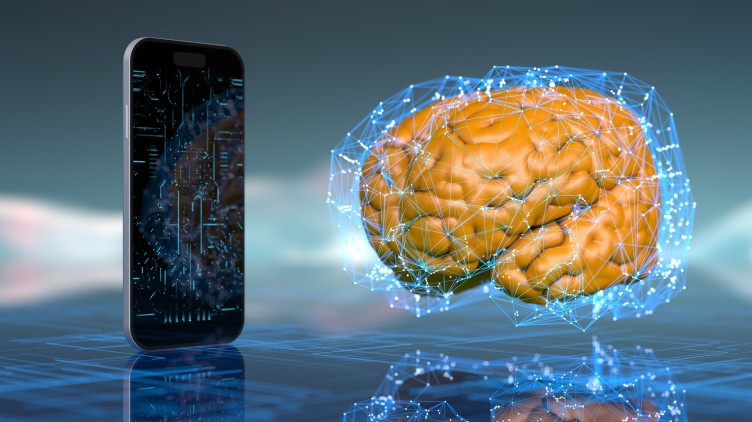
We stand at the precipice of a major shift in our understanding of work. Just as the Industrial Revolution marked the transition from hand production methods to machines, the AI Revolution is poised to redefine what we perceive as ‘knowledge work’. As we enter this new era, we are seeing the steady integration of artificial…
-
How AI Models Are Built? From Problem Definition to Deployment—The Full Lifecycle of AI Model Development
by :

The video features Martin Keen explaining a five-step framework for building and deploying AI models. It highlights the impact of AI on various aspects of work and life, emphasizing the processes involved in AI development and implementation. The framework aims to provide a clear structure for creating effective AI solutions.
-
The Impact of Artificial Intelligence
by :

Artificial Intelligence (AI) has transformative impact on various industries and daily life. It has the potential to unlock trillions in productivity. While AI enhances creativity and optimizes operations, it requires quality data and human oversight. Understanding its capabilities and limitations is essential as AI continues to reshape job roles and skills.
-
What Are the Limitations of Artificial Intelligence?
by :

Artificial intelligence has notable limitations, including difficulties in understanding context, a lack of true creativity and emotional intelligence, dependence on quality data, challenges in explaining reasoning, and a need for continuous maintenance. Recognizing these constraints fosters a balanced approach to AI’s potential while considering its broader implications.
-
Applications of Artificial Intelligence (AI)
by :

AI has many applications across various sectors. AI is revolutionizing various sectors including agriculture, education, energy, entertainment, environment, finance, healthcare, manufacturing, retail, and transportation. It enhances efficiency through personalized experiences, predictive analytics, and automation. These applications highlight AI’s versatility, but understanding its limitations and broader implications remains essential as we explore its transformative impact.
-
What Are Neural Networks?

A neural network is a machine learning model that emulates human brain functions to make decisions. Convolutional Neural Networks (CNNs) excel in processing image, speech, and audio data. Martin Keen from IBM explains their operation in a lightboard video, highlighting their capability to enable machines to perceive the world as humans do.
-
How do AI and ML work?
by :

AI and ML aim to create machines that can replicate or exceed human abilities by learning from data. ML enables systems to adapt and improve without explicit programming by recognizing patterns and minimizing errors through various learning methods. These techniques are applied across diverse areas, from voice recognition to medical diagnostics.
Recent Posts


Topics
- Artificial Intelligence
- Business
- Business Challenge
- Business Strategy
- Communication
- Digital Transformation
- Engineering
- Finance
- General
- Healthcare
- Human Resources
- Information Technology
- Interviews
- Knowledge Work
- Marketing
- Software Development
- Technology
- The AI Shift
Keywords