Essay · 8 July 2026
Maximizing AI in Structured Business Strategy
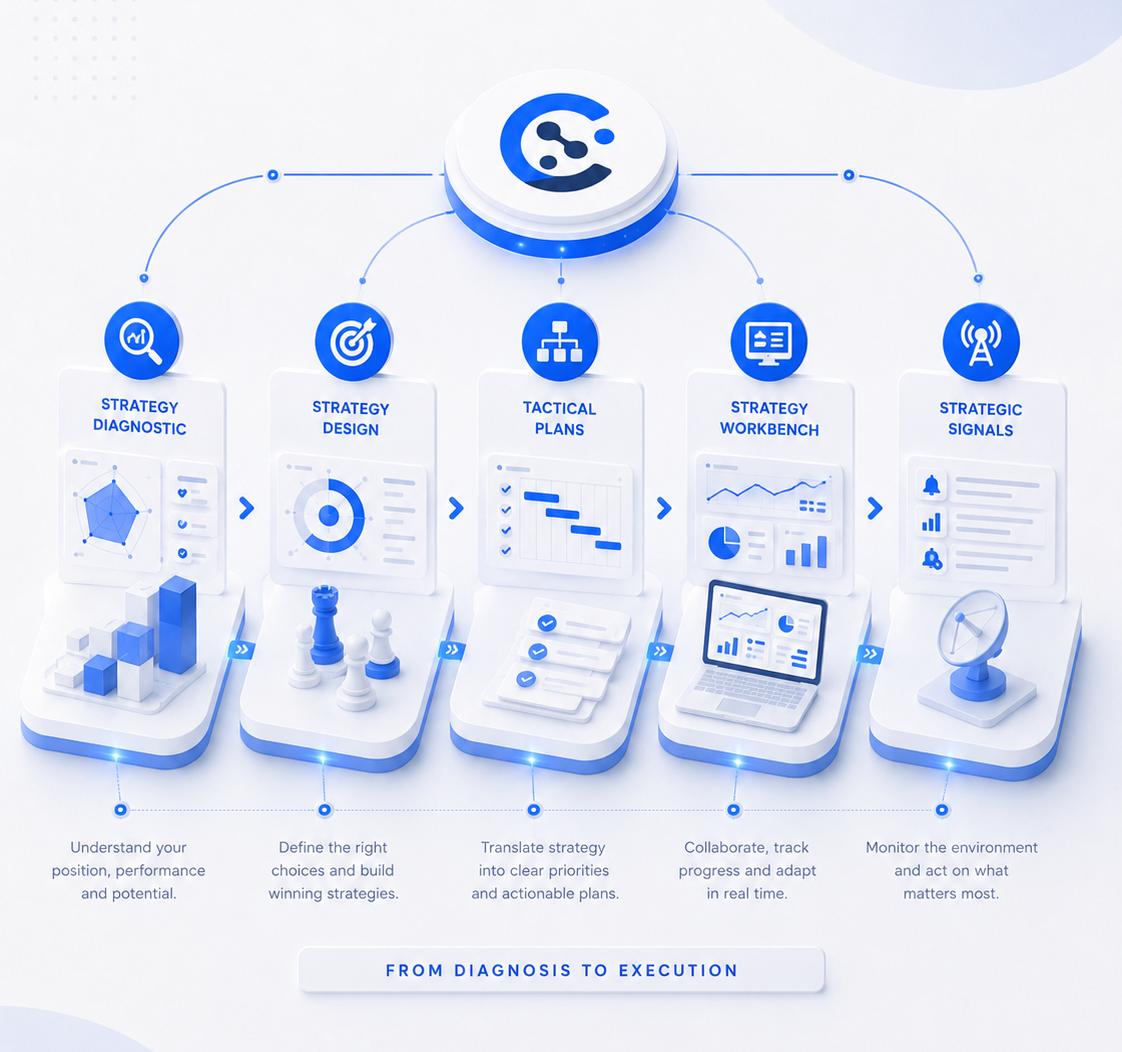
Generative AI tools have become prevalent in professional knowledge work, yet their effectiveness in business strategy is hindered by a lack of structured workflows. Cogliva aims to integrate AI within management processes, promoting continuity from diagnosis to execution. The future lies in utilizing AI for deeper, more connected decision-making rather than isolated responses.
Dr. Maralani
The integration of artificial intelligence into the corporate framework often suffers from a misalignment between technological potential and fundamental business priorities. When executive initiatives lack a cohesive operating model, the resulting efforts remain fragmented, failing to contribute to the overarching strategic objectives of the firm. The challenge for senior leadership lies in transitioning from experimental adoption to a disciplined, value-driven architecture.
How it shows up
- Management deliberations frequently revisit the same themes regarding deployment and focus without reaching a definitive resolution or actionable consensus.
- Key performance indicators demonstrate an inexplicable downward trend or become increasingly difficult for the executive team to interpret accurately.
- Significant organizational issues are addressed as isolated incidents rather than being recognized as recurring symptoms of a systemic strategic void.
- Internal decision-making processes regarding resource allocation become obstructed, leading to frequent escalations that disrupt the pace of delivery.
What usually sits underneath
At the core of these failures is a lack of clear accountability for business outcomes, compounded by insufficient management attention to the structural requirements of emerging technology. When ownership is poorly defined and evidence of efficacy is weak, the organization lacks the necessary routines and incentives to identify and rectify misalignments in the early stages. This often stems from an environment where data integrity is neglected and the governance structures required to oversee complex implementations are either absent or inadequately empowered.
Questions leadership should ask
- What objective evidence confirms that the current gap in the operating model is materially degrading the financial or operational results of the enterprise?
- Which specific leader holds the mandate for refining the strategy and what precise decision rights have been granted to ensure accountability?
- To what extent is the current friction a result of fundamental capability gaps versus an inadequately designed operating model or external market pressures?
- Is the observed decline in reliability and trust concentrated within a single unit or is it indicative of a worsening trend across the entire organizational portfolio?
Common wrong responses
A frequent error among leadership teams is the authorization of numerous pilots and experimental programs in a vacuum. Initiating these technical exercises without established business ownership, verified data readiness, or rigorous value metrics creates a cycle of activity that lacks strategic purpose. Such responses prioritize the appearance of innovation over the reality of value creation, ultimately exhausting resources without providing a scalable foundation for long-term growth.
How to approach it
To rectify these imbalances, the organization must evaluate its position through three specific strategic lenses. The first is the AI Strategy Canvas, which ensures that every technical initiative is directly tethered to the primary business priorities and competitive advantages of the firm. The second involves a Use-Case Portfolio review, categorized by their direct impact on margin, cash flow, and risk profiles to ensure optimal resource distribution. Finally, the AI Operating Model and Governance Review lens focuses on establishing the necessary structures, routines, and accountability frameworks required to move beyond isolated pilots and toward a reliable, integrated corporate capability.
Diagnose this challenge
This brief draws on the structured challenge library in Cogliva, where the challenge can be diagnosed in the context of your organisation. To discuss it directly, see Advisory or Inquire.